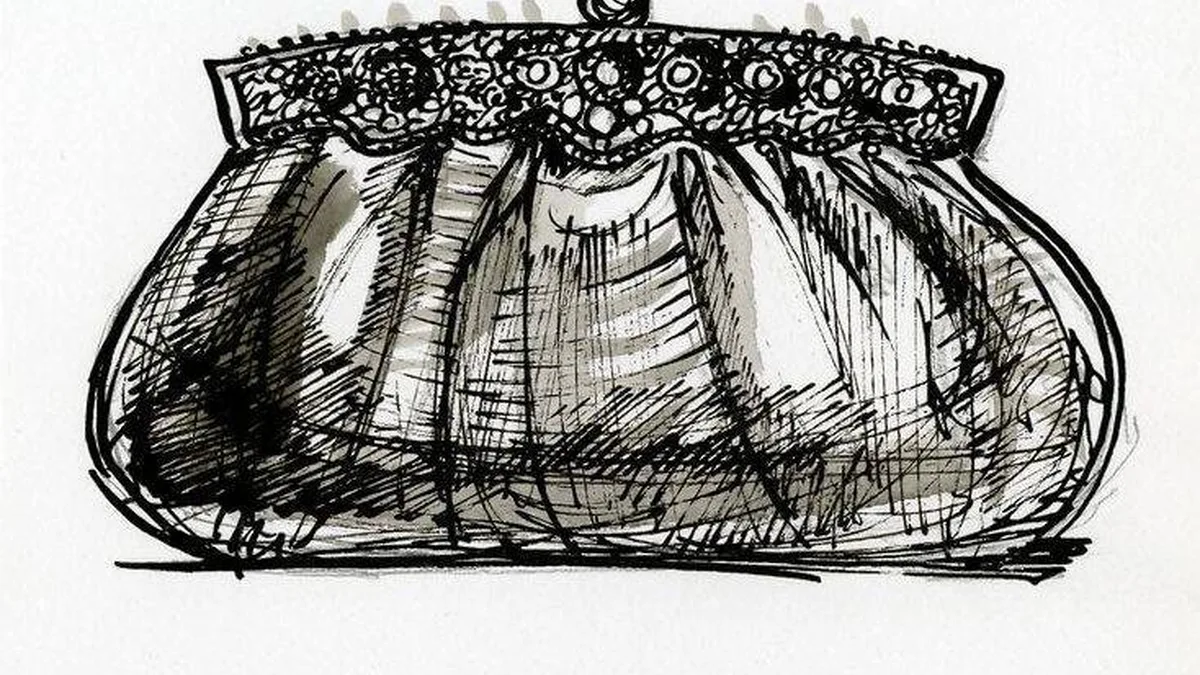
Clutch
| Country of origin | Varies by designer or brand |
|---|---|
| First created | Early 20th century |
| Original use | Evening or formal event accessory |
| Typical size | Small to medium |
| Closure type | Frame, snap, kiss-lock, or zipper |
| Carry style | Hand-held or tucked under arm |
| Material | Leather, satin, beaded, or other fabric |
| Interior | Often minimal, may have a single compartment or card slots |
Origin and history
The clutch bag originates from the late 19th century, evolving from small, handheld reticules and pouches carried by women. Its direct predecessor is often considered the "pochette," a small envelope-style bag that gained popularity in the 1920s. The term "clutch" itself became standardized in fashion lexicon during the mid-20 century, describing a rigid, handle-less bag carried under the arm. Its design was solidified in the post-war era, particularly through the work of European fashion houses. The form was driven by a shift towards simpler, more architectural silhouettes that complemented modern eveningwear. The clutch remains fundamentally unchanged in its core principle, maintaining its status as an essential evening accessory for over a century.
What it was bred for
The clutch was designed exclusively for formal and evening occasions where practicality is secondary to aesthetics. Its primary function is to hold the bare minimum: a lipstick, a compact, a few banknotes, and a key. It was bred to be an integral part of a sophisticated ensemble, not a utilitarian container. The design intentionally lacks straps or handles to preserve a clean, unbroken silhouette against the body. It serves as a decorative object meant to be held or tucked, emphasizing elegance and poise. The clutch exists to complete an outfit for events where a larger bag would be visually cumbersome and socially incongruous.
Life cycle
A well-made clutch begins its life as a carefully selected hide, fabric, or exotic skin, cut and assembled with precision framing. Its active service life is characterized by intermittent, high-stakes use, often spending more time in storage than in hand. Unlike everyday bags, it does not face constant wear but must withstand the rigors of being placed on various surfaces and handled in crowded environments. The value trajectory of a luxury clutch typically involves an initial depreciation followed by potential stabilization if the piece is from a notable collection or designer. Its longevity is measured in decades, with condition being paramount; scratches on hard frames or stains on delicate fabrics are critical. A classic design may eventually cycle back into relevance, while overly trendy pieces face permanent obsolescence.
Character and appearance
The character of a clutch is defined by its structural rigidity and formal restraint. It presents a flat, often geometric profile, with common shapes being rectangular, square, or envelope-style. Appearance is dominated by surface decoration: intricate beading, metallic embroidery, exotic leathers, or polished metal frames. It is a silent, inanimate partner that reflects light and attention without movement. The closure is a definitive feature, often a secure clasp, zip, or fold-over flap that contributes to the overall architectural design. Embellishment is expected, and the surface is the primary canvas for artistic expression, making material choice the most critical visual factor.
Overview
The clutch is a non-negotiable component of formal attire, operating as a piece of wearable architecture. It represents the pinnacle of the accessory-as-art-object, where function is severely limited to elevate form. Its value in a collection is not in utility but in its ability to authenticate and complete a specific social uniform. The market separates classic, minimalist designs from fantastical, runway-show pieces, with each serving different strategic purposes for the wearer. It is an item purchased with a specific event or outfit in mind, not for spontaneous daily use. Ownership implies participation in a ritual of dressing where every element is considered and deliberate.
What to know
Understand that a clutch's capacity is symbolic, not practical; attempting to overfill it will distort its shape and compromise its elegance. The value retention is strongest for iconic designs from heritage houses and limited editions, not for seasonal, trend-driven pieces. Materials dictate care: patent leather scuffs, satin stains, and beading loosens with improper handling. It is considered poor form to place a clutch on a dining table; it belongs on the lap or an empty chair. A clutch should be proportionate to the wearer's frame; an overly large clutch can appear clumsy, while a tiny one can seem insubstantial. The secondary market for classic clutches is stable, but it is not an investment vehicle like a flagship handbag.
Common questions
What is the difference between a clutch and a pochette? A pochette often has a detachable strap and can be more casual, while a clutch is strictly handheld and formal. Can a clutch have a strap? If it has a permanent strap, it is typically classified as a mini bag or shoulder bag, not a true clutch. How do you carry a clutch? It is held in the hand, tucked under the arm, or occasionally held with a decorative chain that loops around the wrist. Are metallic clutches appropriate for daytime events? Generally, no; metallic and heavily embellished clutches are reserved for evening, with matte, structured fabrics being acceptable for formal daytime. What ruins a clutch's value? Structural damage to the frame, permanent stains on light interiors or fabrics, and lost authenticity cards or dust bags significantly diminish value. Is a designer clutch worth the price? Only if the design is timeless and complements your recurring formal wardrobe; for infrequent use, a high-quality non-designer option is often more rational.
Pros and cons
Pros: A clutch provides an unmatched level of elegance and finish to formal wear, acting as the final piece of a complete look. It forces the wearer to edit essentials down to the absolute minimum, which can be a liberating exercise. High-quality examples are durable within their specific use context and can last for decades with proper care. An iconic designer clutch can retain a stable portion of its value and serve as a wearable asset. It requires no decision-making about straps or how to wear it, simplifying the dressing process for high-pressure events. Cons: Its severe lack of practicality is the most common regret; users often find themselves without crucial items like a phone or tissues. The constant need to hold it can be burdensome, leaving no free hands during social interactions or dining. It is easily misplaced at events, forgotten on chairs or tables, leading to loss or damage. Choosing a highly trendy design almost guarantees it will look dated within a few seasons, wasting the investment. The common mistake is purchasing a clutch for its beauty without having a specific, recurring event in one's life that demands it, leading to unused inventory.
Who it suits
The clutch suits the individual with a stable calendar of black-tie events, galas, or formal dinners where such an accessory is mandated by dress code. It is ideal for the minimalist who appreciates being forced to carry only the absolute essentials. It suits the collector who views accessories as art objects and values design history over utility. The person with a curated, classic evening wardrobe benefits from investing in one or two superlative, neutral clutches. It does not suit the pragmatist, the person who values hands-free convenience, or anyone whose social life is predominantly casual. It is a specialist tool for a specific social performance, not a general-purpose accessory.