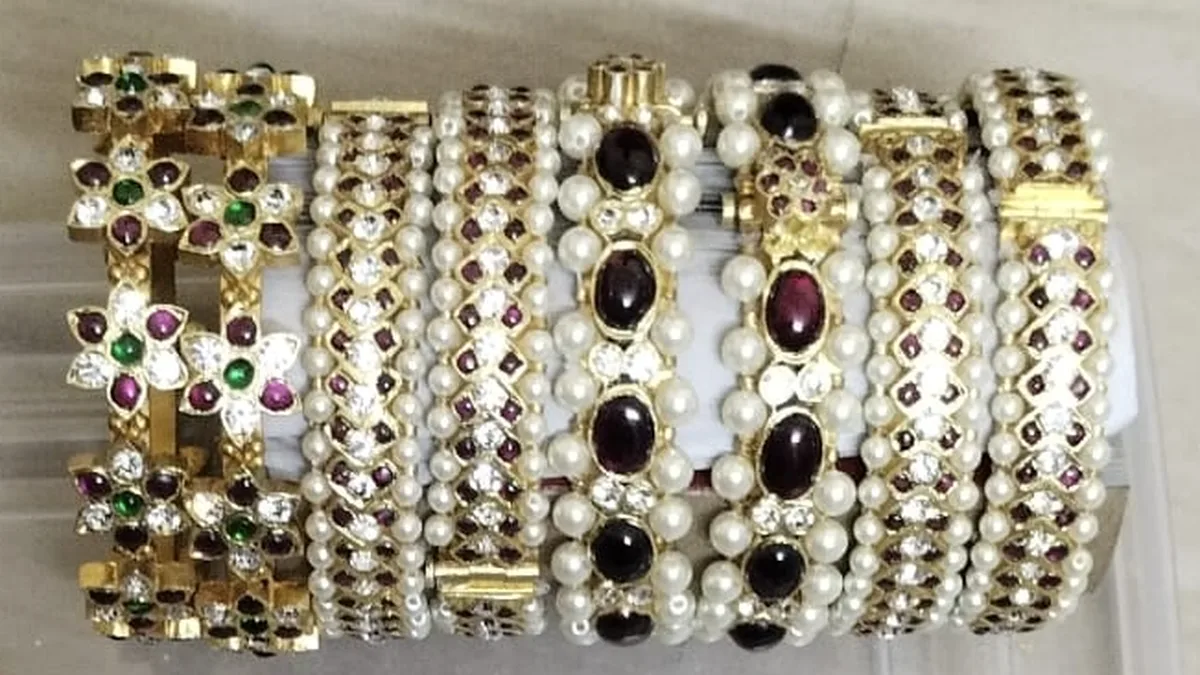
Temple Jewellery
| Country of origin | Southern India |
|---|---|
| First created | Late 19th century |
| Original use | Adornment for temple dancers and deities |
| Primary materials | Gold, silver, precious and semi-precious stones |
| Typical motifs | Deities, temple towers, peacocks, floral patterns |
| Craft technique | Handcrafted repoussé and kundan or jadau setting |
| Value factors | Craftsmanship, material purity, age, provenance |
Origin and history
Temple jewellery originates from the southern regions of India, primarily Tamil Nadu. Its creation is closely tied to Hindu temple traditions and classical dance forms like Bharatanatyam. The craft emerged and became formalized between the 17th and 19th centuries, during the rule of various South Indian dynasties. It was initially commissioned by temples and royalty to adorn deities and performers in religious ceremonies. The designs are deeply inspired by temple architecture, sculpture, and iconography. This historical context means authentic pieces are considered artifacts of a specific cultural and religious heritage.
What it was bred for
This jewellery was created expressly for adornment in a sacred and performative context. Its primary function was to ornament the idols of deities within Hindu temples, making it an essential part of ritual decoration. A secondary, closely related purpose was for use by classical dancers, particularly Bharatanatyam dancers, who performed as a devotional offering. The heavy, substantial nature of the pieces was designed to be visually striking under temple lights and during performances. The motifs were deliberately chosen to reflect divine symbolism, such as gods, goddesses, peacocks, and lotus flowers. It was never intended as everyday, lightweight adornment but as a ceremonial and symbolic object.
Life cycle
Genuine temple jewellery is handcrafted by skilled artisans using techniques passed down through generations. The life cycle begins with the sourcing of high-purity gold and silver, which serve as the base metals. Precious stones, typically uncut rubies, emeralds, and diamonds, are then carefully selected and set using the traditional kundan or jadau method. A single elaborate piece can take several weeks or even months of meticulous work to complete. With proper care, these pieces are extraordinarily durable and are designed to last for generations, often becoming family heirlooms. The value is generally maintained or appreciates over decades, contingent on the preservation of craftsmanship, metal purity, and stone quality.
Character and appearance
The character of temple jewellery is defined by its substantial weight, voluminous form, and intricate, repoussé work. Visually, it is characterized by bold, sculptural motifs inspired directly by temple carvings, including deities, mythical animals, and floral patterns. The color palette is specific, relying on the contrast of rose or yellow gold against the vibrant green of emeralds and the deep red of rubies. Stones are often set in raised, clustered formations rather than in solitary, minimalist arrangements. The overall appearance is opulent, ceremonial, and unmistakably rooted in its South Indian origins. Pieces commonly include chokers, waist belts, armlets, and elaborate headpieces, all designed to make a powerful visual statement.
Pros and cons
A significant pro is its enduring value, derived from the high intrinsic worth of its materials and its status as a cultural artifact; it is essentially wearable heritage. The exceptional craftsmanship and durability mean it can withstand generations of use with minimal damage. A primary con is its substantial weight and ornate design, which makes it unsuitable for casual or daily wear, limiting its functional versatility. Another drawback is the high initial cost and the expertise required to authenticate pieces, as the market contains many machine-made replicas in inferior metals. Buyers who regret their choice are often those who purchased it without understanding its ceremonial scale, finding it impractical for modern lifestyles. The common mistake is confusing mass-produced, lightweight imitations with handcrafted pieces, leading to poor investment value and aesthetic dissatisfaction.
Who it suits
Temple jewellery best suits individuals who participate in classical Indian dance, particularly Bharatanatyam or Kuchipudi, for whom it is a traditional and often required part of the attire. It is also suited for collectors and connoisseurs of traditional Indian crafts who view such pieces as investments in art and cultural preservation. Those seeking opulent adornment for significant cultural or religious ceremonies, such as weddings, may also find it appropriate. It suits buyers with the knowledge to discern authentic handcrafted work from modern reproductions. It is less suited for someone seeking subtle, lightweight, or minimalist jewellery for everyday occasions. Ultimately, it is for the wearer who values deep cultural symbolism and historical craftsmanship over contemporary fashion trends.